
Future of E-commerce?! Virtual clothing try-on agent
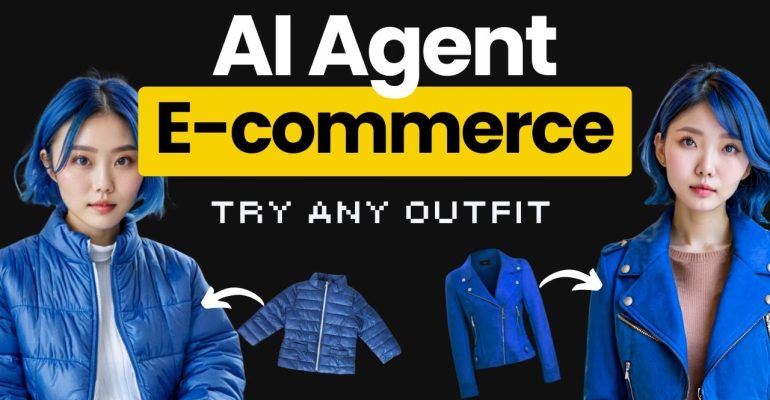
The Future of E-commerce: Harnessing the Power of Virtual Clothing Try-On Agents
As we step into a new era of retail, the e-commerce landscape is being dramatically reshaped by innovative technologies. One of the most exciting advancements is the virtual clothing try-on agent, a tool that is set to redefine shopping experiences, boost customer satisfaction, and significantly reduce return rates. This cutting-edge technology not only enhances the online shopping journey but also bridges the gap between physical and digital retail spheres. Let’s explore how virtual try-on agents are poised to transform the e-commerce industry.
The Rise of Virtual Try-On Technology
Virtual try-on technology utilizes augmented reality (AR) and artificial intelligence (AI) to allow users to see themselves wearing different clothing items without ever having to physically try them on. This technology addresses several challenges that have plagued online clothing retailers for years: the inability for shoppers to try products before purchasing and the subsequent high rates of returns due to sizing issues or unmet expectations.
Enhancing Customer Experience
One of the foremost benefits of virtual clothing try-on agents is the enhancement of the customer experience. This technology provides a tangible, interactive shopping experience for consumers from the comfort of their own homes. Shoppers can experiment with different styles, colors, and fits, making shopping online not only convenient but also fun. This level of interactivity significantly aids in making more confident purchasing decisions and reduces the likelihood of customer dissatisfaction.
Personalization through Machine Learning
Machine learning algorithms play a crucial role in refining the performance of virtual try-on features. These algorithms analyze user data to provide personalized recommendations, further tailoring the shopping experience to individual preferences and body types. The ability to visualize these recommendations on their avatars can significantly boost a customer’s confidence in purchasing products online, thereby enhancing overall satisfaction.
Reducing Return Rates
Product returns are a significant issue in the online clothing industry, often resulting in increased logistics costs and environmental impact. Virtual try-on technology can mitigate these problems by providing a more accurate representation of how a product fits, looks, and feels. As customers get a better preview of the product, the accuracy of their purchases improves, leading to lower return rates.
Sustainability Impact
By diminishing the number of returns, virtual try-on technology also contributes to environmental sustainability. Fewer returns mean reduced carbon emissions associated with logistics and transportation, as well as less packaging waste. This is a crucial step towards reducing the carbon footprint of the e-commerce sector, aligning with the global push towards more sustainable business practices.
Integrating With Online Platforms
The integration of virtual try-on technology with e-commerce platforms can significantly enhance the user interface and usability of online shopping sites. Retailers can leverage this technology to not only attract more customers but also retain them. Success in this integration involves seamless UI/UX design where customers can easily use the try-on feature without feeling overwhelmed by the technology.
Challenges in Implementation
Despite its benefits, the implementation of virtual try-on technology comes with its set of challenges. These include high initial setup and maintenance costs, the need for continuous technological upgrades, and ensuring high-quality visuals that accurately represent products. Furthermore, the technology must be optimized for various devices and browsers to ensure accessibility and ease of use for all customers.
Future Perspectives
As we look to the future, the potential applications of virtual try-on technology extend beyond individual consumer interactions. There is potential for use in virtual fitting rooms in physical stores, integration with social media platforms for shared shopping experiences, and even in advertising, where customers can see models wearing clothes that match their own sizes and preferences.
The Role of Data Privacy
With the increase in data usage, especially personal data like physical dimensions, there is a growing concern about privacy and security. Future advancements in this technology must ensure robust data protection measures are in place to gain and maintain consumer trust.
Conclusion
The integration of virtual clothing try-on agents in e-commerce platforms marks a significant shift in the way we think about shopping for clothes online. By providing an interactive, personalized shopping experience, reducing returns, and contributing to sustainability, this technology holds the promise of revolutionizing the retail landscape. Despite the challenges in implementation, the benefits it offers to both retailers and consumers are substantial. As technology continues to evolve, the full potential of virtual try-on agents remains to be seen, promising an exciting future for the e-commerce industry.
[h3]Watch this video for the full details:[/h3]
I built an agent system which will autonomously iterate & generate img of AI model wearing certain cloth and produce millions+ social posts
Free access to run any comfyUI workflow, hands-restoration model, upscaler & more on Replicate: https://replicate.fyi/ai-jason
🔗 Links
– Join my community: https://www.skool.com/ai-builder-club/about
– Follow me on twitter: https://twitter.com/jasonzhou1993
– Join my AI email list: https://crafters.ai/
– My discord: https://discord.gg/eZXprSaCDE
– Get the source code: https://forms.gle/yYaE4WvzY7qHW3j16
– Install ComfyUI: https://github.com/comfyanonymous/ComfyUI
– Deploy your comfyUI workflow: https://replicate.fyi/jz-any-comfyui-workflow
– Hand-restoration model: https://replicate.fyi/jz-hand-restoration
– Ultimate-portrait-upscale: https://replicate.fyi/jz-ultimate-portrait-upscale
– Install insightface: https://www.youtube.com/watch?v=vCCVxGtCyho&ab_channel=DataLeveling
– IP Adapter (FACEID) Models: https://huggingface.co/h94/IP-Adapter-FaceID/tree/main
– IP Adapter Models: https://huggingface.co/h94/IP-Adapter/tree/main
– ControlNet (SD1.5) Models: https://huggingface.co/lllyasviel/ControlNet-v1-1/tree/main
– ControlNet (SDXL) Models: https://huggingface.co/lllyasviel/sd_control_collection/tree/main
– Checkpoint Models: https://civitai.com/
– More in-depth comfy UI tutorial by Data Leveling: https://www.youtube.com/watch?v=oYjEFHb–RA&t=3s&ab_channel=DataLeveling
⏱️ Timestamps
0:00 Intro
0:43 Use case
2:01 How does img generation works
5:37 ComfyUI Basic
07:21 Method 1: Integrate cloth into existing image
09:38 Method 2: Finetune model & IPAdapter
10:55 Install comfyUI manager, custom nodes & models
14:30 Step 1.1: Generate AI model face
19:51 Step 1.2: Embed cloth img
21:43 Step 1.3: Hand restoration & Upscale
24:00 Step 1.4: Deploy image generation pipeline
24:43 Overview of how to build self-improving agent system
26:12 Step 2.1 Setup agent tools to call AI models
29:30 Step 2.2 Setup multi agents system
34:02 Demo
👋🏻 About Me
My name is Jason Zhou, a product designer who shares interesting AI experiments & products. Email me if you need help building AI apps! ask@ai-jason.com
#gpt5 #stablediffusion #openaidalle #autogen #gpt4turbo #gpt4 #ai #artificialintelligence #tutorial #stepbystep #openai #llm #chatgpt #largelanguagemodels #largelanguagemodel #bestaiagent #chatgpt #agentgpt #agent #autogen #autogpt #openai #aiimages
[h3]Transcript[/h3]
